
An Irishman Dumps Tea in Boston Harbor


An Irish man from County Kilkenny named Thomas White was part of the history-making Boston Tea Party on December 16, 1773, when angry Bostonians led by Sam Adams and the Sons of Liberty boarded three British ships and dumped 92,000 pounds of tea into Boston Harbor.
Their act of defiance over “taxation without representation” was part of a growing dispute between the British Crown and the colonies that helped trigger the American Revolution.
The Tea Party is commemorated each year in Boston, as people gather to watch militia groups and marching bands, and listen to fiery re-enactors recalling that famous night in Boston’s storied history.
White was born on March 19, 1739 in Kilkenny and likely immigrated to the American colonies as a teenager. Canadian immigration records from 1756 cite a Thomas White landing in Nova Scotia, a destination for many Irish and Scots during this decade. At age 30 White married 25 year old Elizabeth Jones in Philadelphia, where he worked as a tailor, family records indicate.
According to Evan O’Brien of the Boston Tea Party Ships and Museum, “like so many people in the colonies, White got caught up in the fervor of the protests. He was a member of the St. Andrew’s Lodge of Freemasons, (who) were heavily involved in planning the Boston Tea Party and other revolutionary events.”
In September 2023, a special ceremony in White’s honor was held at the Rothe House & Garden on Parliament Street in Kilkenny City. The historic house dates back to 1594 and is now a center for Kilkenny family history research and genealogy service.
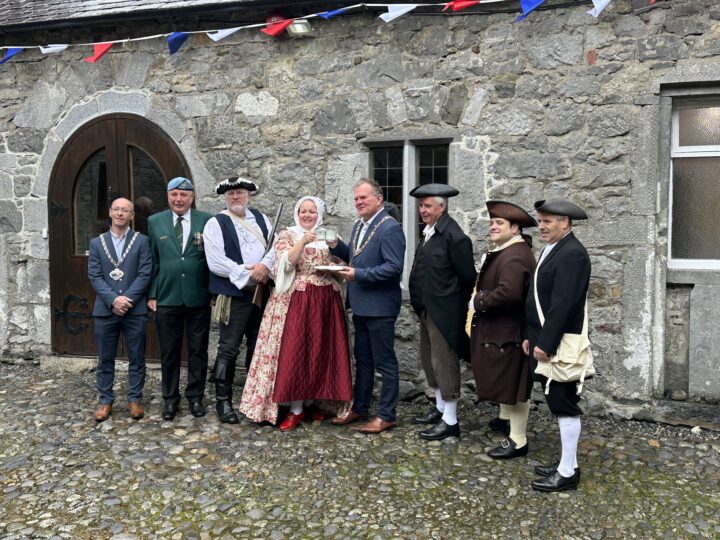
Rothe House in Kilkenny. Photo by Jonathan Lane.
Attending the Kilkenny event was Jonathan Lane, executive director of Revolution Boston 250, a non-profit group celebrating the 250th anniversary of events in Massachusetts leading up to the Declaration of Independence, and Josiah George, of Boston Tea Party Ships and Museum, who gave a dramatic, first-person portrayal of Thomas White in full revolutionary era costume.
For Pennsylvanians, Thomas White is a proud part of their contributions and sacrifices made throughout history. Sometime after the Boston Tea Party, White returned to Pennsylvania, where he fought in the American Revolution with Captain John McTeer’s Company, First Class, 3rd Battalion, Cumberland County Militia.
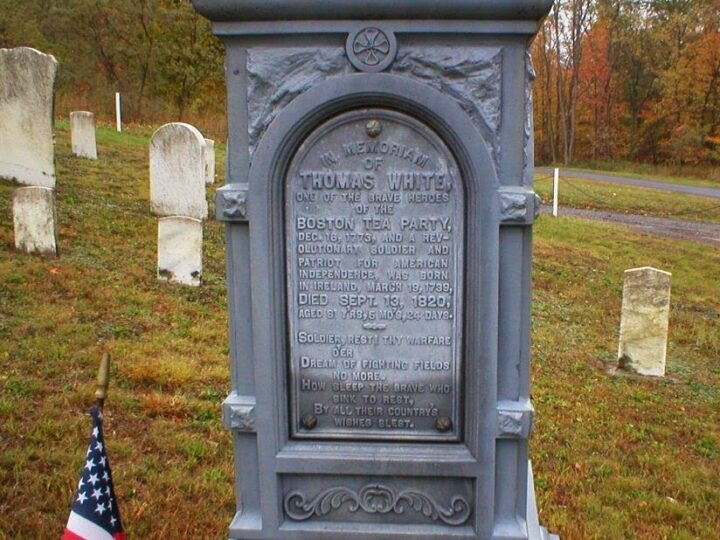
Photo courtesy of Find a Grave
After the war, White moved his family to Huntingdon County in Central Pennsylvania where he and his wife had 21 children. Three of his sons served in the War of 1812; one of them, Ezekiel White, was captured at the Battle of Lundy’s Lane, and died of dysentery in a prison camp. White himself died on September 13, 1820 and is buried in the family plot at Evans Cemetery in Bedford, PA.
On July 4, 1899, at a reunion of the White family, members of local patriot societies unveiled a monument at the gravesite, with the epithet: “One of the brave heroes of the Boston Tea Party, December 16, 1773 and a Revolutionary Soldier and Patriot for American Independence.” In 1973, a Thomas White Historical Society erected an historic road sign near the gravesite.

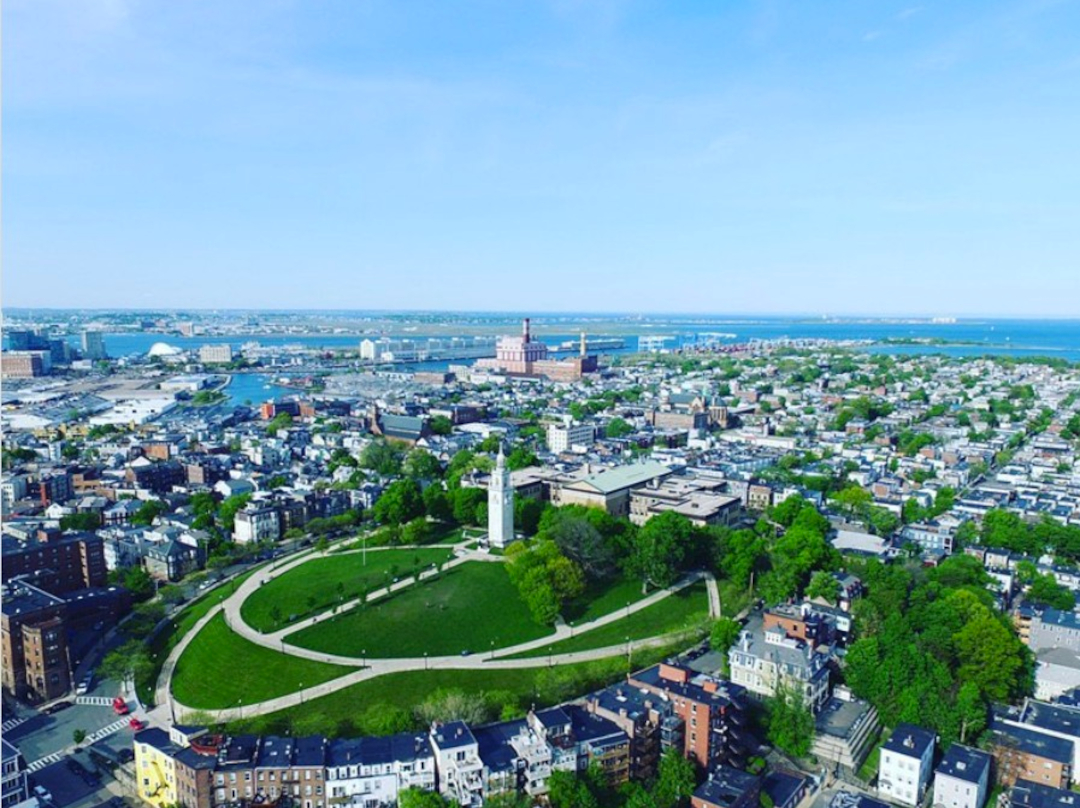
Thomas White’s role in the American Revolution is part of the new Revolutionary Irish Trail to chronicle the role of the Irish and Scots-Irish in the American Revolution. is just the beginning of a multi-year effort to mark other historical events in Boston, such as the Battle of Concord and Lexington, the Battle of Bunker Hill, the Henry Knox Expedition from Ticonderoga to Cambridge, and the famous Dorchester Heights stare down of the British fleet led by General John Sullivan.
These efforts are part of America 250, a national initiative to celebrate the 250th anniversary of the Declaration of Independence and the events leading up to it. More than 40 states and territories have signed on to participate in the national celebration.
Enjoy articles like this?
Join our mailing list and have the latest sent to your inbox.