September 13 is Commodore John Barry in Massachusetts, in Honor of America’s Naval Hero

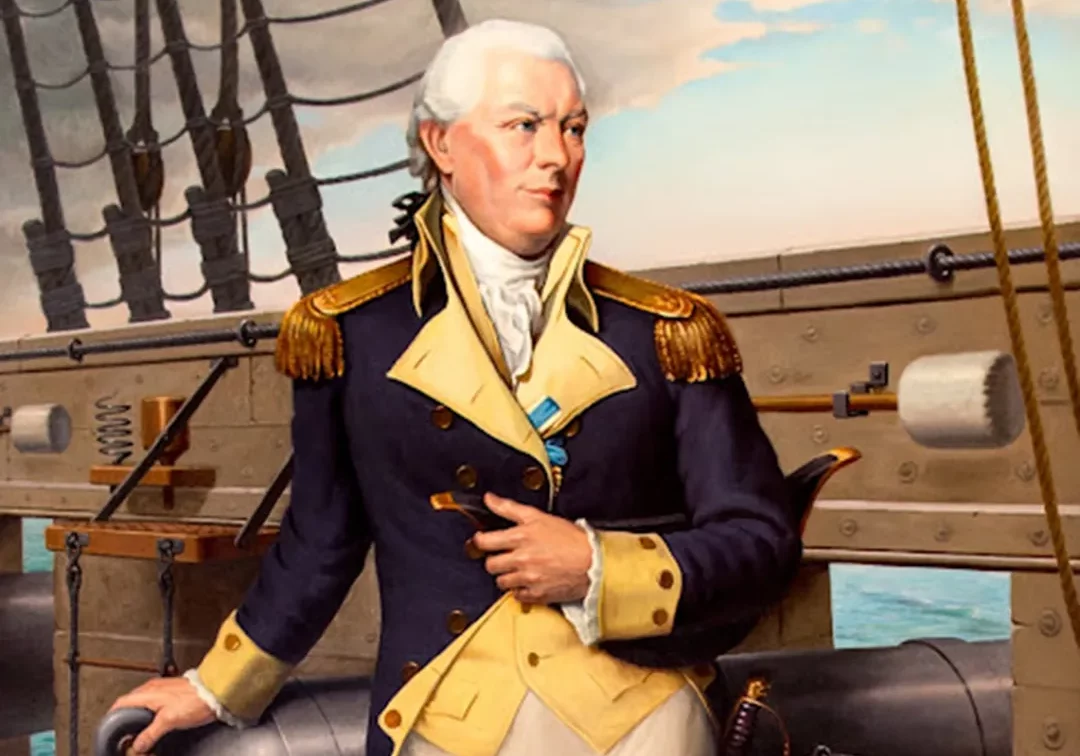
Since 1934, September 13 is offically Commodore John Barry Day in Massachusetts, in recognition of Barry’s distinct role as a naval hero during the Revolutionary War, and in honor of the day he died on September 13, 1803 at age 59. He is buried at Old Saint Mary’s Cemetery on S. Fourth Street in Philadelphia, PA.
In May 1934, the Massachusetts state legislature issued this language:
The governor shall annually issue a proclamation setting apart September thirteenth as Commodore John Barry Day and recommending that it be observed by the people with appropriate exercises in the public schools and otherwise, as he may see fit, to the end that the memory of the service rendered by him during the struggle for American independence may be perpetuated.
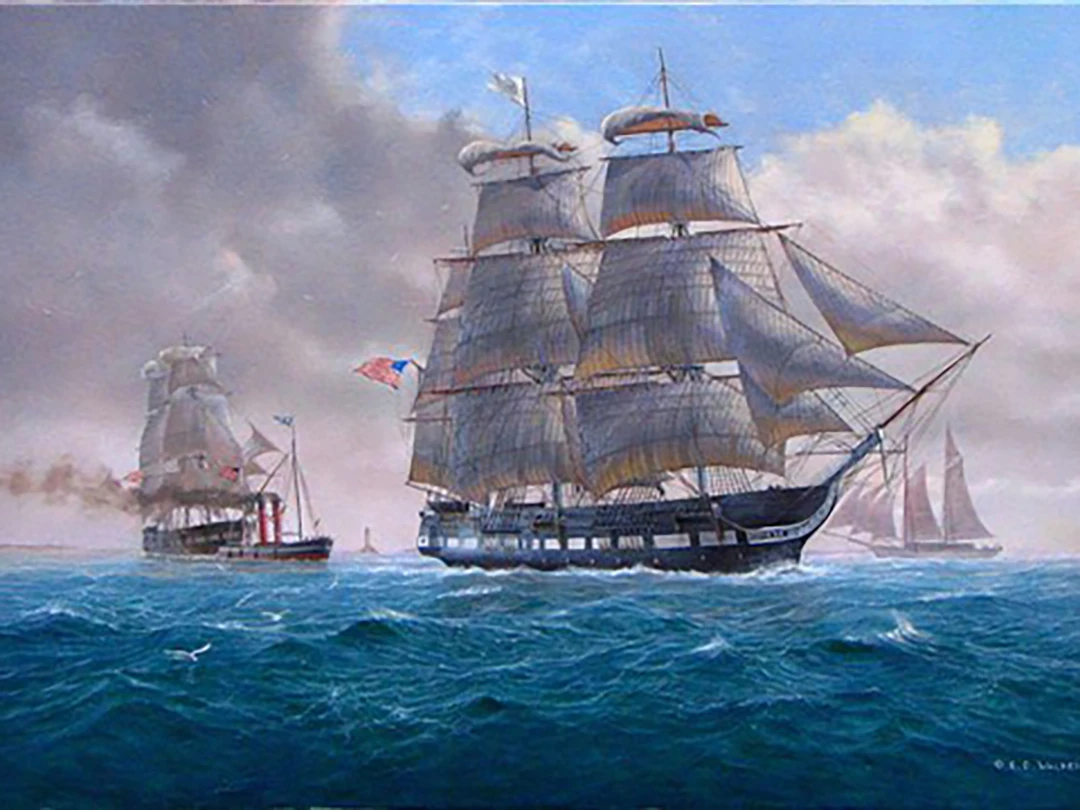
Considered one of the true military heroes of the American Revolution, Barry was born in Tacumshane, County Wexford on March 25, 1745. At age 15, he emigrated to Philadelphia in 1760, and joined the American forces at the outbreak of the war. Barry’s ship, the Lexington, was the first to capture a British vessel under the American flag. During much of the war, Barry commanded ships out of Boston Harbor, including the Delaware and the Alliance.
After the war, President George Washington assigned Barry to help create the United States Navy.
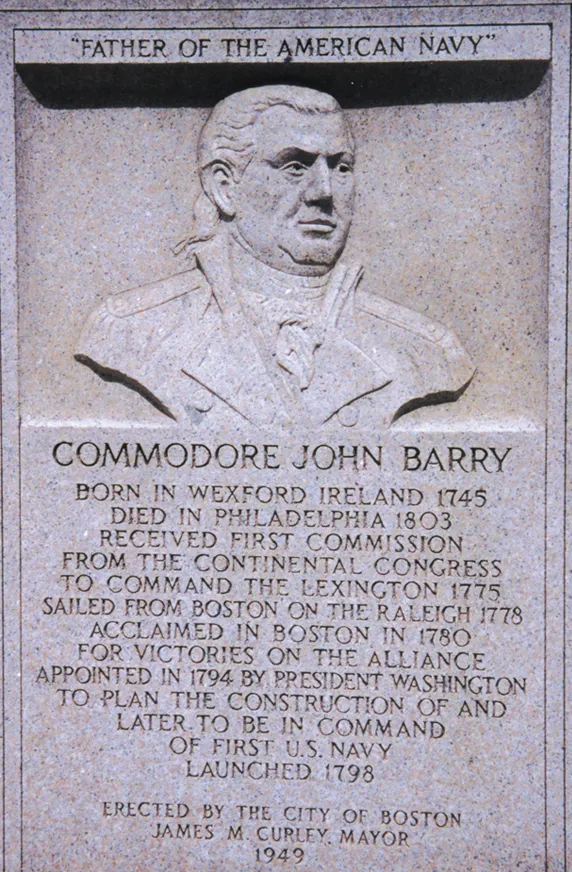
Boston Mayor James Michael Curley was an advocate of having Barry honored in Boston, and in his final term in office, vowed to commemorate Barry with a public space. Speaking at the Charitable Irish Society annual dinner on March 17, Curley promise he would build a memorial to Barry in 60 days, stating that Barry had been ignored for too long. The project got underway immediately, and the bronze memorial was actually unveiled seven months later, on October 16, 1949 on Boston Common.
The Barry memorial has had some interesting downturns. On April 5, 1975, someone – possibly local college students – stole the bronze plaque as a prank, and a stone version of the plaque was put in its place. Contrition set in a few years later and the thieves anonymously returned the plaque to the Massachusetts Ancient Order of Hibernians, who returned it to the city. The original bronze memorial was put in storage at the L Street Bathhouse in South Boston, then on Saturday, September 12, 1981, it was transferred from the Boston Arts Commission to the National Parks Service for permanent display at the Charlestown Navy Yard. The original Barry plaque was recently discovered in a warehouse gathering dust, having been forgotten since 1981.
Visitors can see the Commodore John Barry Memorial on Boston Common, located along Tremont Street between Lafayette Mall and the Visitor Information Center.
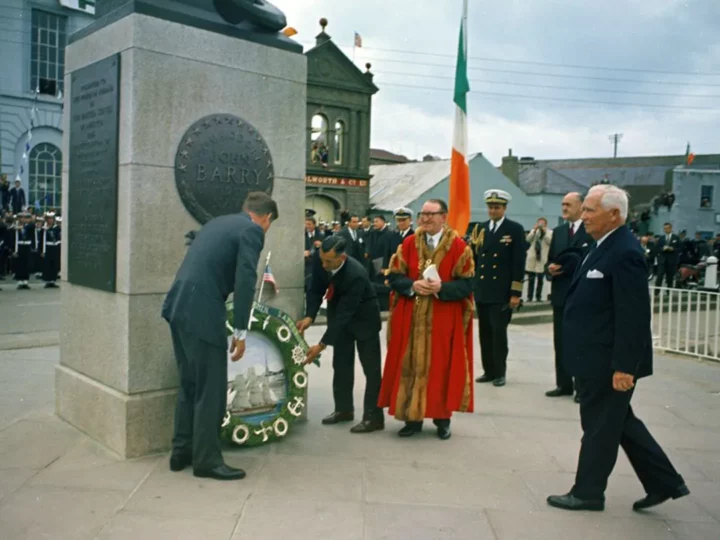
President John F. Kennedy was a great admirer of Commodore Barry. He owned John Barry’s sword and displayed it in office at the White House. In addition to sharing a love of the sea and sailing, both men traced their lineage to County Wexford. When he visited Ireland in June 1963, President Kennedy placed a wreath at the John Barry Memorial in Wexford. The Wexford John Barry statue was created by sculptor Wheeler Williams and cast at T.F. McGann & Sons Foundry in Somerville, MA. It was shipped to Ireland from the Charlestown Navy Yard.

The Commodore John Barry plaque on Boston Common is part of the IrishHeritageTrail.com and also part of Boston’s Revolutionary Irish Trail unveiled in March 2026 as part of America 250 celebrations.

Enjoy articles like this?
Join our mailing list and have the latest sent to your inbox.