



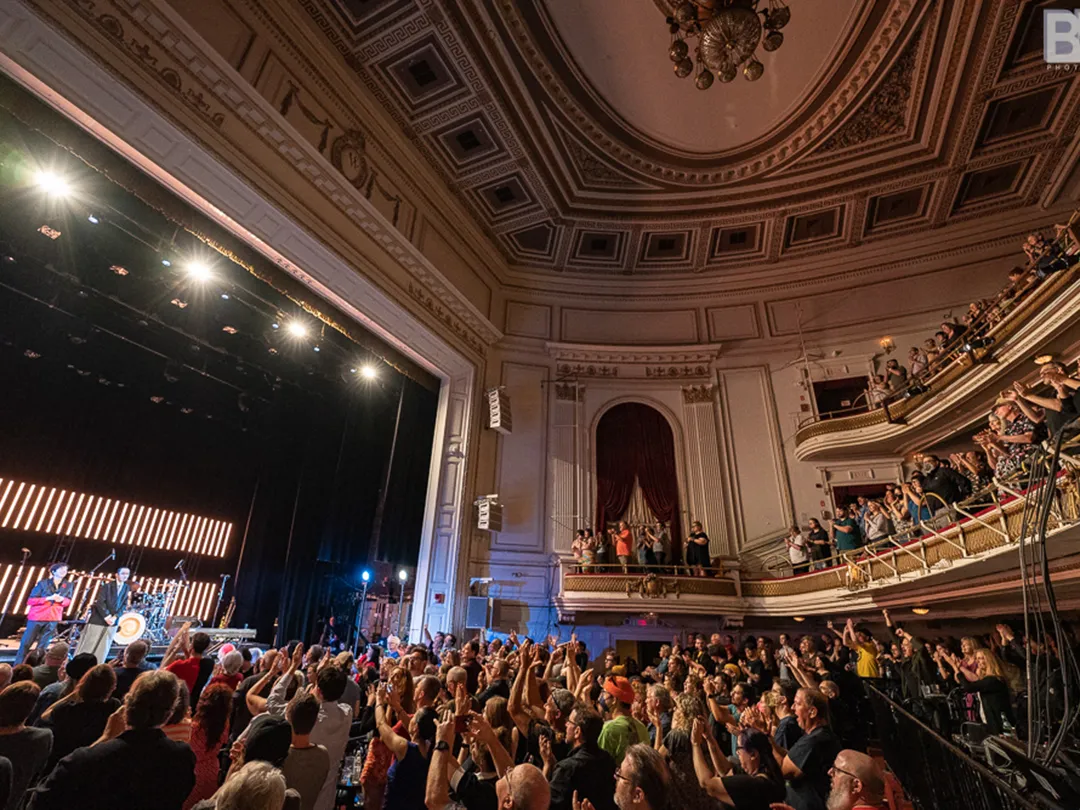
The Wilbur Theatre opened its doors in 1914, designed by noted Boston architect Clarence H. Blackall in the American Colonial style. Rather than imitating the ornate European opera houses popular at the time, Blackall gave The Wilbur a uniquely Boston character—its stately portico was salvaged from an 1830s Beacon Hill townhouse and incorporated into the façade on Tremont Street. The theatre’s design is remarkably intimate; even the furthest seat from the stage is likely closer than most you’ve sat in elsewhere. The reason is simple—when the theatre was constructed, sound amplification technology didn’t exist in 1914.
Named for theatrical producer A.L. Wilbur, the venue quickly became a stage for both local and national talent. In its early decades, it was a proving ground for productions bound for Broadway, and it welcomed performances by some of the most renowned actors of the 20th century—including a young Marlon Brando.
The Wilbur earned a spot on the National Register of Historic Places in 1980 and was designated a Boston Landmark in 1987. In the 1990s and early 2000s, the theatre changed hands and underwent modern updates, while maintaining its historic charm.
In 2008, former owner of the Comedy Connection, Bill Blumenreich, took the reins, revitalizing the space and reintroducing it as one of the city’s premier venues for stand-up comedy, live music, and special events. Today, The Wilbur remains intimate yet versatile, and its stage has hosted everyone from legendary musicians to top comedians. The Wilbur consistently ranks among the Top 5 Worldwide Selling Clubs each year, as reported by Pollstar Magazine.
You Might Also Like...





Irish Boston Partners
These organizations promote Irish Culture in New England.