Irish Boston History
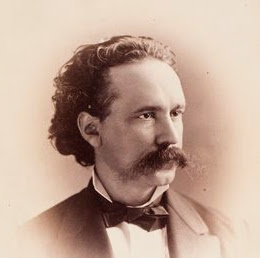
Boston sculptor Martin Milmore, although primarily hailed as a sculptor of Civil War monuments, sepulchral art and exquisite busts, created statues of two local heroes of the American Revolution. The first is a statue of Boston patriot Sam Adams, known as a fiery advocate for revolution, located today at Cary Memorial Hall in Lexington, MA….
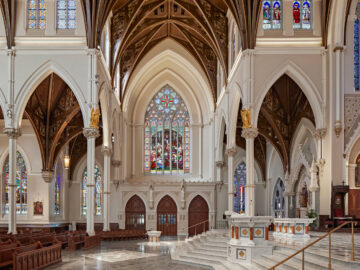
Cathedral of the Holy Cross in Boston, Photo by Elkus Manfredi Patrick Charles Keely (1816-1896), regarded as one of the great neo-Gothic church architects of the 19th century, designed more than 600 churches and 16 cathedrals throughout the United States between 1846-1896. Born in Thurles, County Tipperary on August 9, 1816, Keely was the son…

The public’s fascination with President John F. Kennedy and his family remains strong in Massachusetts. The native son, whose great-grandparents emigrated from Ireland to Boston during the famine in 1848, inspired generations of people around the world with his political leadership, courage, wit and wisdom. This summer, visitors have a chance to see brand new exhibits…
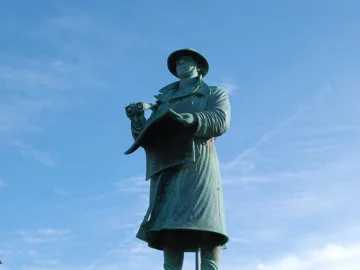
Boston’s Edward L. Logan International Airport was named for General Edward L. Logan (1875-1939), a first generation Irish-American military leader, civic leader and municipal judge with family roots in Ballygar, Galway and South Boston. Edward was the oldest of nine children of Lawrence and Catherine (O’Connor), according to the late Michael Cummings of Milton, an expert on…
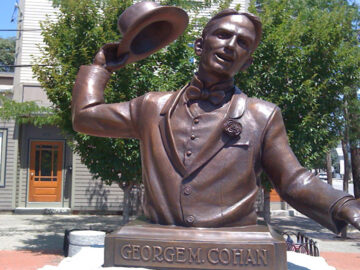
George M. Cohan, (1878-1942), famed Broadway song and dance man whose songs helped define the World War I generation, was born in Providence RI on July 3, 1878. A statue honoring Cohan at the corner of Wickendon and Governor Streets in Providence was created by noted sculptor Robert Shure, who also created the Irish Famine Memorial in Boston and in Providence. The…
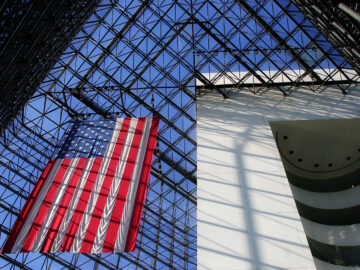
Visitors to the John F. Kennedy Presidential Library & Museum come from all over the world to be inspired and to remember one of America’s most beloved presidents, Boston native John Fitzgerald Kennedy. Open seven days a week from 10 a.m. to 5 p.m., the JFK Library sits on a 10-acre site overlooking Boston Harbor…
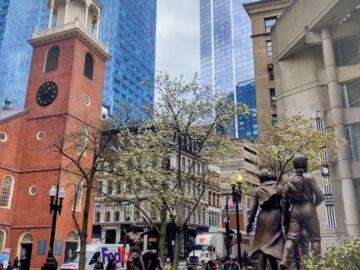
History is replete with stories about refugees from around the world coming to Boston, Massachusetts, seeking help from tragedies of historic proportions that were too massive for them to face. Very often they were poorly received, as locals feared the burden these immigrants would have on society. One of the most compelling chapters in the…
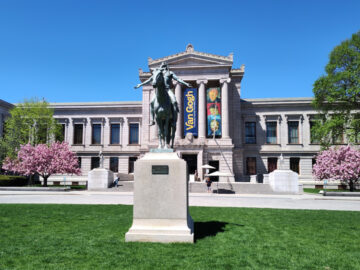
A visit to the Museum of Fine Arts (MFA) in Boston is always inspiring. Encircled by local colleges, cozy small restaurants and the stunning Back Bay Fens, a natural parkland designed by Frederick Law Olmsted, the exterior setting is almost as beautiful as the museum itself! The front entrance to MFA on Huntington Avenue is…
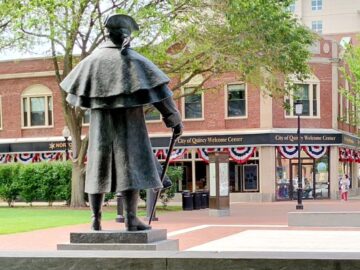
Happy Birthday City of Quincy! The picturesque city of 100,000 residents marks its 400th anniversary in 2025 as one of the most historic and vibrant cities in New England. Located seven miles south of Boston, this bustling urban center is encircled by 27 miles of coastline facing the Atlantic Ocean and 7,000 acres of gently…
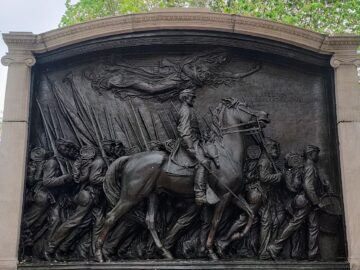
Boston’s most iconic public monument, the Shaw Memorial, was officially unveiled on May 31, 1897. The homage to the 54th Black Infantry Regiment of Boston is considered one of America’s most significant Civil War memorials. It was the first public monument to accurately depict black soldiers in military uniform. The memorial was created by immigrant Augustus…

The famous Boston Athletic Association (BAA) was founded in the late19th century by an unlikely coalition of leading Boston Brahmins and a famous Irish rebel, John Boyle O’Reilly (1844-90). The BAA was created at a time when amateur sports were increasingly popular across the United States. There were many collegiate teams in greater Boston and numerous small associations, but the…

Forbes House Museum in Milton
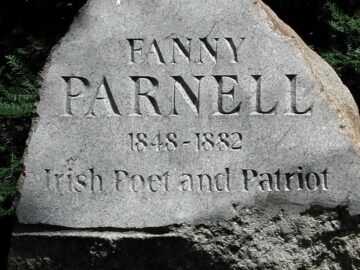
On April 11, 2001, the Parnell Society of Dublin placed a granite marker at the grave site of Ms. Fanny Parnell at Mount Auburn Cemetery in Cambridge, honoring her role as a patriot and poet of Ireland. The ceremony was led by Ireland’s ambassador to the United States Sean O hUuiginn, Irish government official Frank Murray and members…

John Barry, a naval hero in the American Revolution, was born on March 25, 1745 in County Wexford, Ireland. His parents were James Patrick john Barry and Mary Ellen Cullen. Barry was “born in the townland of Ballysampson and lived his boyhood in the townland of Rostoonstown, both in the parish of Tacumshane,” according to…
The post-Famine generation of Irish women in Boston and New England were typically relegated to jobs as domestic servants, nursemaids and mill workers, before eventually being accepted as shop clerks, nurses and teachers. This work was often in addition to their primary role running households as wives and mothers. The young Irish girls of the Famine…

On March 21, 1926, two top traditional fiddlers from the British Isles and Ireland, 82 year old James Scott Skinner of Aberdeen, Scotland and 76 year old John Wiseman of Bantry, County Cork, arrived in Boston Harbor aboard the Cunard liner Carolina. They were here to compete in the World’s Old Fiddlers Contest, taking place April…

The John F. Kennedy Presidential Library & Museum is one of Boston’s most popular destinations, and welcomes local residents, school classes, convention groups and visitors from around the world to come and be inspired. Open seven days a week from 10 a.m. to 5 p.m., the JFK Library sits on a 10-acre site overlooking Boston…
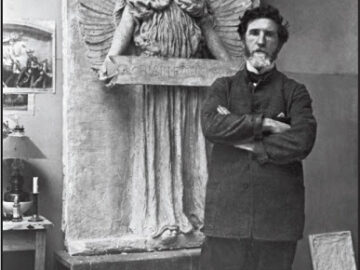
One of America’s most acclaimed sculptors of the 19th century was actually an Irish immigrant. Augustus Saint-Gaudens (1848-1907) was born on March 1, 1848 on Charlemount Street in Dublin at the height of the Irish Famine, when millions of Irish were fleeing Ireland to places like Boston, New York, Montreal, St. John and other eastern port cities….

Tip O’Neill Bust in Buncrana, photo courtesy of Visit Donegal Legendary politician Thomas P. ‘Tip’ O’Neill, one of the most impactful politicians of American politics in the 20th century, died on January 5, 1994 at his home in Harwichport, Cape Cod. He was 81. Born in North Cambridge on December 9, 1912, he was the son…
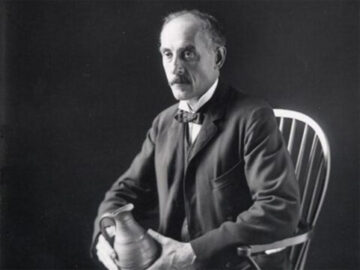
Portrait of Louis St. Gaudens, photo courtesy of Saint Gaudens National Historical Park Louis St. Gaudens (1854-1913), whose iconic sculptures grace the American landscape today, was born in New York City on January 8, 1854. He was the son of Bernard Saint-Gaudens from France and Mary McGuinness from Ireland, and the brother and protégé of his…

A new era in city government took hold on Monday, January 5, 1885, when Hugh O’Brien became Boston’s first Irish-born mayor. O’Brien’s victory at the polls in December finally broke the hegemony of old-line Yankees who had run local government since Boston was incorporated as a city in 1822. O’Brien defeated incumbent mayor Augustus Pearl Martin by 3, 124…

On November 14, 1888, state and city officials and citizens from greater Boston officially unveiled the Boston Massacre Memorial on the Tremont Street Mall on Boston Common. The memorial commemorates the infamous episode in which five men were shot and killed by British soldiers in Boston on March 5, 1770, an event that helped launch the…
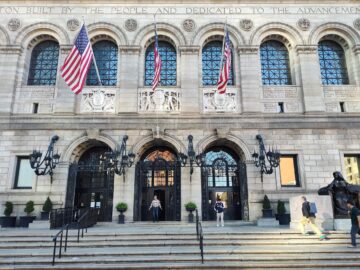
The Boston Public Library (BPL), founded in 1848 and acclaimed as the People’s Palace, has an incredible collection of books, videos, music, genealogy resources and educational materials available to the public. The BPL also has a celebrated collection of art and sculpture throughout the library that inspires library staff, visitors and residents every day. The McKim Building itself is…

Kip Tiernan, Photo courtesy of Rosie’s Place The next time you are exploring Boston’s Irish Heritage Trail, stop by the memorial to Kip Tiernan (1926-2011), social activist, writer, teacher, visionary and provocateur. The Kip Tiernan Memorial is located in Boston’s Back Bay on Dartmouth Street between Newbury and Boylston streets, next to Old South Church, and…
Get the Latest Irish News & Events in Your Inbox
Join our mailing list

Editor's Picks





Irish Boston Partners
These organizations promote Irish Culture in New England.